Pakistan Independence Day: 14 August 1947
Pakistan, officially known as the Islamic Republic of Pakistan, is a country in South Asia. It gained independence on 14 August 1947 after the historic struggle of the Muslims of the subcontinent under the leadership of Quaid-e-Azam Muhammad Ali Jinnah.
In 2026, Pakistan celebrates its 79th Independence Day, marking 79 years since independence in 1947. Every year, 14 August is celebrated across the country with national flags, ceremonies, patriotic songs, decorations, fireworks and prayers for the peace, prosperity and progress of Pakistan.

Pakistan – Location and Geography
Pakistan occupies an important geographical position connecting South Asia, Central Asia and the Middle East. It has a coastline along the Arabian Sea and is bordered by India to the east, Afghanistan and Iran to the west, and China to the northeast. The narrow Wakhan Corridor of Afghanistan separates Pakistan from Tajikistan.
The country has remarkably diverse landscapes, ranging from the Arabian Sea coastline and the plains of Punjab and Sindh to the deserts of Thar and some of the world’s highest mountain ranges in the north.
Ancient History and Cultural Heritage
The region that forms present-day Pakistan has been home to some of the world’s oldest civilizations. The archaeological site of Mehrgarh provides evidence of early settlement, while the Indus Valley Civilization, including the famous city of Mohenjo-daro, became one of the great civilizations of the ancient world.
Over thousands of years, the region experienced the influence of numerous cultures, kingdoms and empires. Persian, Greek, Buddhist, Islamic, Turkic, Mughal, Sikh and British influences all contributed to the rich and diverse historical heritage found in Pakistan today.


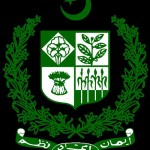
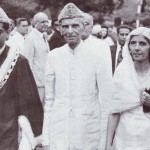
Pakistan’s Independence on 14 August 1947
The creation of Pakistan was the result of a long political and constitutional struggle by the Muslims of British India. Quaid-e-Azam Muhammad Ali Jinnah led the All-India Muslim League and became the central figure of the Pakistan Movement.
The demand for a separate homeland gained decisive momentum with the Lahore Resolution of 1940. Seven years later, Pakistan emerged as an independent state in August 1947.
Quaid-e-Azam became Pakistan’s first Governor-General, while Liaquat Ali Khan became its first Prime Minister. Independence represented the beginning of a new chapter, but the newly established country also faced enormous challenges, including the settlement of millions of refugees and the creation of new government institutions.
Islamic Republic of Pakistan
Pakistan adopted its first constitution in 1956 and officially became the Islamic Republic of Pakistan. Today, Pakistan is a federal parliamentary republic consisting of four provinces: Punjab, Sindh, Khyber Pakhtunkhwa and Balochistan, along with the Islamabad Capital Territory. Azad Jammu and Kashmir and Gilgit-Baltistan have separate administrative arrangements.
In 1971, following political turmoil and armed conflict, East Pakistan separated and became the independent country of Bangladesh.
Pakistan Today
Pakistan has changed enormously since independence. Its population has grown to well over 240 million people, making it one of the world’s most populous countries and home to one of the world’s largest Muslim populations.
Pakistan is also ethnically, culturally and linguistically diverse. Urdu is the national language, while Punjabi, Sindhi, Pashto, Balochi, Saraiki and numerous other regional languages form an important part of the country’s cultural identity.
Agriculture, manufacturing, textiles, services, information technology, overseas remittances and trade are important parts of Pakistan’s economy. The country continues to work through economic, educational, environmental, governance and development challenges while seeking greater prosperity for its people.
Pakistan’s Defence and International Role
Pakistan maintains one of the world’s significant armed forces and became a nuclear-armed state in 1998. It is a member of major international organizations, including the United Nations (UN), Organisation of Islamic Cooperation (OIC), Commonwealth of Nations and Shanghai Cooperation Organisation (SCO).
Its geographical location gives Pakistan strategic importance in regional trade, security and connectivity between South Asia, Central Asia, China and the Middle East.
14 August 2026 – 79th Independence Day of Pakistan
On Friday, 14 August 2026, Pakistan celebrates its 79th Independence Day. From Karachi to Peshawar and Quetta to Lahore, Islamabad and the northern regions, streets, homes, markets and public buildings are traditionally decorated with Pakistan’s green and white national colours.
The national flag is raised at government buildings, while special ceremonies, cultural programmes and celebrations are held throughout the country. Pakistanis living abroad also celebrate Independence Day and express their connection with their homeland.
The day is also an opportunity to remember the sacrifices made during the Pakistan Movement and to honour Quaid-e-Azam Muhammad Ali Jinnah, Allama Muhammad Iqbal, Fatima Jinnah and the countless people who contributed to the struggle for an independent homeland.
Message of Independence Day 2026
Independence Day is more than a celebration. It reminds every Pakistani of the responsibility to contribute positively to the country.
The values of unity, faith and discipline remain closely associated with Quaid-e-Azam’s vision for Pakistan. Education, tolerance, honesty, hard work, justice and respect for one another can help build a stronger and more prosperous nation.
As Pakistan marks 79 years of independence in 2026, the occasion provides an opportunity to celebrate the country’s achievements, learn from its challenges and look towards the future with determination and hope.
Happy Independence Day Pakistan — 14 August 2026!
Pakistan Zindabad! 🇵🇰


as
PAKISTAN ZINA ABAD